Category: Uncategorized
COVID-19 stories
Home
- BPD, COVID-19 and Me
- Experts by experience: the effects of isolation during COVID-19 pandemic
1. BPD, COVID-19 and Me
Published in RETHINK
https://www.rethink.org/news-and-stories/blogs/2020/08/bpd-covid-19-and-me/
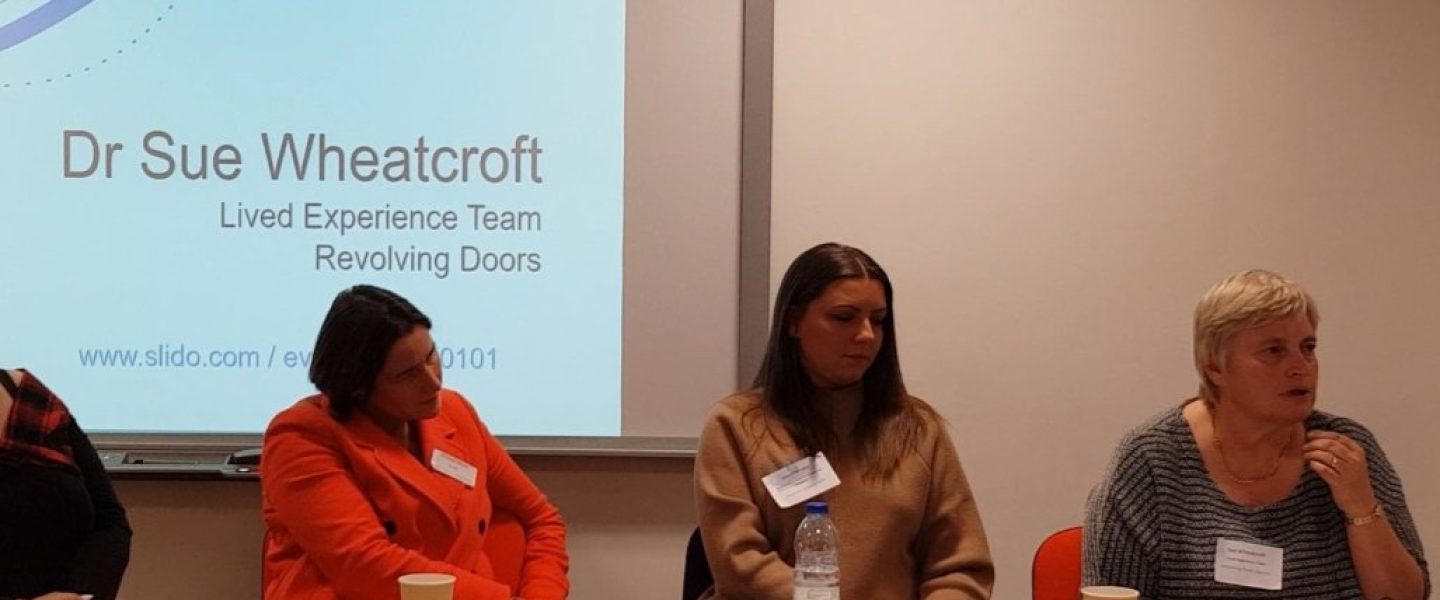
Sue Wheatcroft is a campaigner and group coordinator who lives with Borderline Personality Disorder (BPD). Winner of our prestigious Janey Antoniou award in 2019, she’s made huge inroads in challenging stigma and creating change for people living with mental illness. In this blog, she explains what it is like living with BPD, and what impact the Covid-19 pandemic can have on the way we all look at the condition.
With so many deaths, and key workers putting their lives at risk, I feel a little self-indulgent talking about my problems, but everything is relative, right? I am a full-time carer for my wife; I also have a diagnosis of Borderline Personality Disorder (BPD). Some of you will have a good insight of what this is, others will have never heard of it and, rather worryingly, some people will only know the negative aspects of the condition and believe the hype and stigma caused by misunderstanding, fear and ignorance.
This is not the place to discuss BPD in detail; it’s a big subject and deserves greater time. What I can say is that we who have the condition, struggle to manage our emotions. ‘We all do, sometimes’, you may think, but how many of you go from passive to aggressive at the flick of a switch? A seemingly innocuous comment from someone we care about can be misinterpreted or exaggerated, bringing about an immediate wish to die. It is extreme and it is serious. One in ten people with BPD end their own lives.
- We who have the condition, struggle to manage our emotions. ‘We all do, sometimes’, you may think, but how many of you go from passive to aggressive at the flick of a switch?
There are many studies currently being carried out on the societal effects of the Coronavirus outbreak, and what it could mean for us all moving forward. There is a lot of things that need to be considered within that: domestic abuse & homelessness among other things. These are not new problems!
The issue that has come to the fore more prominently, is mental health. Over the past few years, depression has received increasing attention although, sadly, not so much the less common issues, such as BPD. Hopefully, that is about to change. It is expected by many, that the heroic actions by health professionals, and others, in caring for the more serious COVID-19 patients, will result in an increase in cases of PTSD. Both BPD and PTSD are trauma related conditions and BPD is known by many as Complex-PTSD. Undoubtedly, there will be help for COVID-19 heroes if they need it, and rightly so. Hopefully, if we manage to raise awareness and understanding of BPD, some of that help might trickle down to those with the condition.
- The reason I am writing this, is because it is time for people with BPD to get the help they need.
The reason I am writing this, is because it is time for people with BPD to get the help they need. I run support groups for those with the condition, and their families and support workers. There is a serious lack of statutory help and the little there is, has been put on hold due to COVID-19. Now, with the lockdown and social distancing measures, these support groups have also been put on hold, leaving people alone with their difficulties. Not everyone can discuss their feelings on zoom! For anyone who thinks that BPD is ‘just bad behaviour’, imagine the following scenario:
Female, aged 7, subjected to physical, sexual, and emotional abuse by father, and abandoned periodically by mother. Aged 14-16, runs away, police take her back, telling her she is a nuisance; takes overdose, spends several days in A&E, told she is a bad person for worrying her parents; bullied at regular school for having nervous tics; attends special school but is still bullied; admitted to psychiatric ward but is traumatised by seeing an elderly man being aggressively forced-fed by two male nurses; aged 16, discharged from adolescent mental health services. Leaves home with violent boyfriend…
This is not an isolated case, by any means, but should people like this be blamed for developing BPD… for struggling with their emotions and all the other distressing effects of the condition? Can you see the similarities between this and PTSD? Isn’t it time to stop the stigma of BPD and introduce a little compassion? If you are a health worker, prison officer, police officer or probation officer, please take some time to understand this condition. Seventy per-cent of people in prison have some form of personality disorder and BPD is the most prevalent among women. I know from experience, that this is an avoidable outcome, but without a better understanding and more help, it will not change.
Both Rethink Mental Illness and Mind have produced very good information booklets on BPD. If you would like to know more about our support groups, please contact me at derbyshireborderlinepd@gmail.com
2. Experts by experience: the effects of isolation during COVID-19 pandemic
Article: Experts by experience: the effects of isolation during COVID-19 pandemic • WEPHREN
It has been said that self-isolation due to the threat of Coronavirus is ‘just like being in prison’. As someone who has experienced both, I feel well-placed to say that, although there are certain similarities, it is not the same!
Let’s ignore the fact that prisoners are currently experiencing their own lockdown, being confined to their cell 23 hours per day, with only one hour to shower and exercise. When people say it’s like being in prison, they most likely mean prison on a ‘normal’ day, i.e., before the advent of the Coronavirus.
One of the main issues of isolation, whether in prison or in one’s own home, is boredom. Those in prison who still have their privileges (any ‘bad’ behaviour can lead to a loss of these) will have a TV in their cell, and books from the library or sent in by friends/family. Many prison wings have a snooker table. Most prisoners have a job or education classes to keep themselves busy four and a half days a week, and there is a gym. Largely due to bad press, prisons are seen as easy, but think about the monotony of having this small set of activities, every week, month or perhaps even years, broken up only by medical appointments and the occasional visit. Then add to this the fact that staff shortages often lead to more in-cell time than is recommended or even humane!
Those on lockdown in the community may also become bored, depending on their particular circumstances. For example, most will be with their own family; those who can afford it are able to order in items to keep themselves busy; they will have no restrictions on online activities, and the hour of exercise can take place in a different area (close to home) each day – as opposed to the same prison exercise yard.
Another problem of isolation is loneliness, although this is not so straight forward. People in prison can be lonely because they have very little contact with their friends and loved ones. Those who do not make friends easily will feel this loneliness even more. For others, prison offers a community spirit that many prisoners crave. They may become institutionalised and, if they do not have a healthy support system in the community, they expect to, and do, return to prison soon after release.
Loneliness in the community, again, tends to depend largely on the individuals’ situation before the lockdown. Those who lived with others continue to do so. Although they may miss certain people, they are not totally alone (although it is possible to be lonely in a crowd if there is no personal connection). However, for those who lived alone and continue to do so, the loneliness may have worsened, especially if they previously had the occasional visit from friends, family members, support workers etc.
The issue that is most common to both people in prison and under community lockdown, is fear and anxiety. In prison, people can live in fear of other prisoners, prison officers, their potential sentence (if on remand) and their physical and mental health. For these people, the sense of being alone, without easy access to information and support, will make that fear/anxiety more extreme.
Those self-isolating in the community due to the Coronavirus will, naturally, be in fear for their own health and that of others. They may even be in fear of loss of life. However, although this fear might be stronger than that felt by prisoners (in a non-Coronavirus environment), there is more access to information and support in the community. In addition, contact with loved ones outside the home, whether by phone or social media, may act as a source of comfort.
All these issues: boredom, loneliness, fear and anxiety, are detrimental to an individual’s mental health. The vast majority of people in prison have some kind of mental health problem which is, more often than not, exacerbated by the stresses of living in prison. Although not as prevalent in the community, most individuals with mental illness whether in prison or community, have suffered from the lack of services caused by under-funding and, to some extent, by a certain amount of apathy and/or stigma among commissioners and the general public.
Regardless of whether self-isolation due to the coronavirus is ‘the same as being in prison’, if the general public think it is, then it may have a positive effect on prison welfare. To some extent, public opinion dictates government policy and it is thought by many that prisoners have a ‘cushy’ life, rather than suffering for their crimes. In law, punishment should be the separation from the rest of society, and not the conditions under which they are made to live. With this in mind, members of the public might realise just how ‘punishing’ it is to be kept away from loved ones; knowing that you cannot be there for them if they need you; the distressing effect of no physical contact with, say, children and/or grandchildren; fear of what could happen next; and the uncertainty of whether life will ever be ‘normal’ again.
The circumstances in which we find ourselves at the moment are unprecedented but appear to have brought out the best in people. Life has slowed down considerably, giving them time to re-evaluate what is important. Perhaps this can be capitalised upon when reviewing prison reform.
Sue Wheatcroft is Expert by Experience at Revolving Doors Agency in England (LINK http://www.revolving-doors.org.uk/). She is also a Research Assistant in the national Cancer Care in Prison Study (How is cancer care best provided to patients in English prisons? Assessing the disease burden in the prison population, experiences of diagnosis, treatment and support, and of receiving and providing cancer care LINK: https://www.journalslibrary.nihr.ac.uk/programmes/hsdr/165253/#/)
Dying on the inside: Britain’s ageing prisoner problem
With more than triple the number of prisoners aged 60 and over today than there were 15 years ago, the strain of caring for them is having detrimental effects on their health… and the system. Emily Goddard reports
Bolted gates, closed doors and impenetrable barriers – of both the physical and symbolic kind – are intrinsic of the prison estate. Yet the door of a room on the healthcare wing of a category B prison remains conspicuously open. Inside lies a man in his eighties, unable to get out of bed and constantly watched by nurses, both day and night, because the end of his life is near.
“The Prison Service is paying for an outside carer to come in to look after him,” says Michael, a prison officer who works at the prison and does not want his real name to be used. “He’s got to the age where he just can’t do anything. He doesn’t leave his room, his dinner has to be brought to him every day, if the carer is not there the nurses have to get him out of bed and put him on the toilet. He’s reaching the point where he could go any day.”
By Michael’s estimation, half of the people in the prison where he has worked for five years are beyond the age of 45. And the dying octogenarian is by no means the oldest man there: Michael works on a wing where a high-needs 94-year-old is housed in a specially adapted disabled cell.
“He isn’t able-bodied,” the prison officer says. “He has to walk with a Zimmer frame. And I think he’s got Alzheimer’s because he forgets to use it and is constantly falling over. We have to go into his cell to pick him up and call the nursing staff.”
Care for elderly prisoners ‘inconsistent and only set to get worse’
Michael describes various times when he has caught the prisoner attempting to walk outside his cell without his frame; it bears a startling likeness to the everyday happenings in a care home environment. “I’ll notice and then have to support him to walk to the medication hatch. Then I’ll have to support him back and remind him to sit down because he gets out of breath very easily. I’ll tell him to stay there and I’ll go to get his food from the servery for him.”
Then there are the frequent visits to hospital that require at least two officers, plus a third tasked with driving, to take the nonagenarian and other elderly or unwell prisoners to routine medical appointments. “This is detrimental to the staffing levels in the establishment. We need as many boots on the ground as possible,” Michael says.
Those boots on the ground are increasingly finding themselves supporting an ageing prison population. The oldest person in prison in England and Wales has a whole decade on the oldest man in Michael’s prison. Ralph Clarke is a 104-year-old great-grandfather jailed for 13 years in 2016 for historical sex offences dating back to the 1970s and ’80s.
People aged 60 and over are the fasting growing age group in prisons in England and Wales – there’s more than triple the number inside today than there was 15 years ago. Almost a fifth of the more than 82,000 people serving sentences across the prison estate in England and Wales are now beyond the age of 50. More than 1,800 of them are 70 or older and, among that number, more than 300 are over 80.
Michael says the surge in older people entering prison has been noticeable. “We’re used to getting the young lads that are messing about on the street,” he says. “We get between 20 and 30 [people coming into custody] a day and recently there’s not so many 20 to 30-year-olds, it’s more 40 to 60-year-olds.” The reason for the trend, he suspects, is partly down to rising numbers of people coming forward to report historical sex offences in the wake of high-profile cases involving household names.
The way I look at it is if one of my relatives, one of my friends were to end up in prison, how would I want them to be treated. I always try to replicate that in the way I deal with people. Everyone is just one mistake away from being there, one mistake away from a custodial sentence
William, not his real name, is a fellow prison officer working in another category B prison in England. He has seen a similar influx of older prisoners and agrees with Michael on a possible cause. “Operation Yewtree, Jimmy Savile, all these other big media events have seen an awful lot of people come forward to say: ‘It [sexual abuse] happened to me,’” he explains. “So although you’ve seen the likes of celebrities being locked up for it, what hasn’t been so widely publicised is that there’s a lot of what I’d call normal people who have been locked up for sex offences too. If the abuse happened in the Sixties and Seventies, by definition, those blokes are now in their sixties, seventies and eighties.”
Although the rising number of older people entering the prison he works at is evident, William suggests it is far more pronounced in other places. He says he has friends who work as prison officers at HMP The Verne on the Isle of Portland in Dorset. This is a specialist category C prison for men convicted of sexual offences – where Gary Glitter is rumoured to be among the almost 600 men held there. Of the prison, he says: “If you were to take a walk around there, it would look like a very secure old age people’s home.”
The prison officers’ evaluations are borne out in data that reveals almost half (45 per cent) of the over-fifties in prison have been convicted of sex offences. For those aged 80 and older, that figure jumps to 87 per cent. Michael says, however, he has seen older people being brought in for stealing food – “because they simply couldn’t afford to buy it”.
Just as the ageing population beyond the bounds of prison walls is more likely to have complex health problems than its younger counterpart, older prisoners typically have extra physiological and psychological needs. “A lot of them we have to locate flat (provide ground floor accommodation) due to mobility issues, they might walk with a stick or a frame or crutches, you can’t put them upstairs. That puts pressure on the prison and the estate a whole,” William explains.
John is 54 and spent three months in prison before being released in May 2018. He has mobility problems and has pins running up his right leg after being involved in a motorcycle accident many years ago. When he was taken into custody he was put on the top bunk of a bed. “I was trying to clamber up,” he says. “This went on for about a week and I got pretty ill, but in the end they did give me a big cell on the ground floor.”
Meanwhile, Sue, who is 59 and went to prison for the first time in 2015 before being released in February 2017, says fellow prisoners rather than staff often managed intimate elderly care. Although she was serving a short sentence, Sue was put on a lifer’s wing – as well as in segregation for five months because of mental health problems – alongside women in their seventies and remembers older people “sticking together”. “They were grateful for just being all together,” she says.
“If someone was incontinent it would be another prisoner, a friend on the wing, who would help her, the help wouldn’t come from the officers,” Sue continues. “They would get them the sanitary wear but as far as anything else goes it’s down to the people you’re with on the wing. It’s better to have friends do it, but there is the guilt of asking them all the time and you can’t expect that. It depends on how severe your problem is. If you’re really incontinent you can’t expect anyone to do that all the time.”
The MoJ says it is helping prisoners learn how to support those with lower level social care needs in the same way family or friends may do with those living in the community.
William has seen this coming together of older prisoners to support each other too. In his previous job in a category C jail where several prisoners used wheelchairs, one prisoner became a wheelchair orderly, playing a similar role to that of a porter in hospital. “He is essentially a taxi service,” William explains. “You call his residential unit and say I need a wheelchair from wherever the prisoner is to wherever they’re going and he’ll be on his way.”
Aside from the practicalities of housing older people in overcrowded and sometimes poorly equipped prisons, there are the regular hospital visits and inpatient stays on wards. Just the day before we speak, William had been sat for 12 hours at the hospital bedside of a prisoner in his eighties who has cancer and was jailed for almost six years in November 2019. The man has been in hospital since before Christmas and each bed watch shift requires two prison officers. “Almost continuously for the last year we’ve had an old prisoner in hospital,” William says.
But not all hospital appointments go ahead as planned. The Prison Reform Trust says it continues to hear of people facing challenges when trying to access healthcare, including mental health services – and the consequences can be severe. The charity makes clear that the blame does not always lie with the healthcare service itself and is calling for a national strategy with estate-wide input to remedy the situation.
“We regularly hear about external hospital appointments being cancelled due to lack of staff or transportation – delaying diagnosis and disrupting routine and urgent treatments, and causing a great deal of stress to patients,” a spokesperson says. “For the health needs of older prisoners to be met, both healthcare services and prison operations must be tailored to the population profiles and projected need of each prison.”
Tony, who has served several sentences in multiple prisons, echoes the Prison Reform Trust’s concerns about the outcomes for unwell older prisoners. He was released for the last time – last, because he did “a lot of hard work” to ensure everything is behind him now – in November 2018 at the age of 53 and has older friends in prison who have cancer. He believes “100 per cent they would stand a better chance if they could’ve got to [hospital] appointments regularly”. He adds: “The negative impact on their illness gets magnified. It definitely gets made worse.”
A freedom of information request to HM Prison Service asking for the number of outpatient hospital appointments cancelled for prisoners revealed the Ministry of Justice could not answer my question because it does not hold the information. “This is because there is no legal or business requirement for the MoJ to do so,” the response reads.
The MoJ says every effort is made to ensure inmates get to necessary external appointments and that its capacity to escort prisoners has been enhanced by the recruitment of 4,400 prison officers since 2016. William admits, however, that despite trying to avoid them, appointment cancellations do happen.
Christina Marriott, the chief executive of Revolving Doors Agency, is alarmed by the impact barriers to healthcare can have on people in prison and highlights the fact that the damage can be felt even after they have been released. “Of course, prisons don’t set out to make you less healthy, but conditions in prisons and poor facilities can make your health go from bad to worse,” she says. “If people don’t get the healthcare they need, it costs lives. Since 2011, the number of people who die after being released from prison has increased fivefold. That’s a staggering and depressing fact. Meeting health needs head on and early on is the smart thing to do, it saves lives and it has the power to change them.”
While positive change is theoretically one of the key principles underpinning rehabilitation of people who have committed crime, there are concerns that little progress is being made to facilitate that for older prisoners. The Prison Reform Trust says it is not convinced that Her Majesty’s Prison and Probation Service (HMPPS) is fulfilling its duties under the Equality or Human Rights Acts in relation to older prisoners. And there is unequal access, the charity says, to the full rehabilitative benefits of prison.
For the health needs of older prisoners to be met, both healthcare services and prison operations must be tailored to the population profiles and projected need of each prison.
That notion becomes yet more troubling when recent changes that could potentially see the prison population ageing still further are considered. Several factors are at play: there is an increasing tendency for judges to hand down tougher sentences – almost half were longer than four years in 2019, compared with a third in 2010; and the automatic halfway release for some serious offenders will end from April under legislation brought in at the beginning of 2020 that will see the release point change to two-thirds of the way through sentences.
The government believes, however, that the prison population is unlikely to grow older – quite the opposite. The MoJ’s most recent prison population projections predict a decrease in over-fifties between 2019 and 2024, while the number of over 60 and over 70-year-olds is forecast to remain constant. That report was published before the policy changes were announced in January and makes clear that it does not take them into account.
The Prison Reform Trust expects most people would view the projections “as optimistic at best, and at worst bearing little relevance to the new reality”, particularly in light of the government’s criminal justice system overhaul. “More police officers to investigate crime; more prosecutors to charge; and more draconian sentencing legislation all point to an increase in demand for prison places in the medium term,” a spokesperson says.
People already in jails getting older and longer sentences are not the only factors contributing to the ageing prison population. There has also been a marked rise in the number of over-seventies being sentenced to immediate custody at courts in England and Wales in the past decade.
Figures obtained by The Independent reveal an 85 per cent increase in men aged 70-plus entering custody directly from courts between 2010 and 2018 (253 individuals to 470). For women, who make up only about five per cent of the overall prison population, there was a staggering 450 per cent surge (from just four in 2010 to 22 in 2018).
The prospect of that trend persisting is a worry for prison officers. “We try our best, but if we got an influx [of older people], there’s no way we would be able to house them all safely,” Michael says.
His concerns may be justified. A 2018 report on social care in prisons by HM Inspectorate of Prisons and the Care Quality Commission found the prison service was failing to plan for the future needs of an increasingly elderly prison population. The MoJ says it has set out a programme of work to respond to the recommendations in the report.
Just months before, the HMPPS made a series of recommendations to help governors better meet the needs of older prisoners.
Among the suggestions in the toolkit are guidance on caring for prisoners with dementia, suitable amendments to regime, access to activities and additional end-of-life support. It is unclear, however, what progress has been made since implementing the guidance, says the Prison Reform Trust. The charity wants to see the guidance supported by mandatory requirements and progress monitoring.
Some prisons do appear to already have examples of good practice in place. HMP Leyhill and Eastwood Park have day centres run by the charity Recoop, while Stafford and Wymott have spaces designed for meaningful activities for older prisoners.
A prison officer, speaking to The Independent, talks about an older person’s tea club at the jail where he works: “Anyone over the age of 65 is invited to attend and they have tea, coffee and biscuits. It happens weekly.” He hints, though, that it is not always easy to ensure the meetups always go ahead. “Unfortunately, it comes down to resources,” he adds. “I don’t want to link back to 2010 but we lost almost 10,000 staff.”
Besides the physical obstacles across the estate, older prisoners are being supervised by staff who say they do not have adequate training for managing the often complex and multiple needs of older people. “We don’t get as much training on that; in terms of looking after the elderly, we’re not trained for that,” says Michael. “And there’s not enough people in the jail that are trained.”
William concurs and says there was nothing in his training that specifically enabled him to support older prisoners. Nevertheless, he believes this lack does not mean he is unable to be a compassionate prison officer. “The way I look at it is if one of my relatives, one of my friends were to end up in prison, how would I want them to be treated,” he says. “I always try to replicate that in the way I deal with people. Everyone is just one mistake away from being there, one mistake away from a custodial sentence.”
A Prison Service spokesperson said: “An ageing prison population poses particular challenges, which is why we work closely with local councils and healthcare providers to best meet the needs of those inmates. All governors have been sent guidance and best practice examples on how to care for older prisoners, and inspectors have praised initiatives such as other offenders supporting the elderly through a buddy scheme.
 Sue Wheatcroft